[toggle title_open=”Page Navigation” title_closed=”Page Navigation”]
| What is BOP | |
| Our Vision | Click to jump to section |
| Our Purpose | Click to jump to section |
| Easy Read & BSL welcome videos | Click to jump to section |
| Our three areas of work | Click to jump to section |
| A note on terminology | Click to jump to section |
| A note on casting | Click to jump to section |
[/toggle]
What is BOP?
Birds of Paradise is a theatre company based in Scotland that was founded in 1993 – you can find out more about the history of the company on this page. Below is our vision and purpose – this sets out who we are and what we intend to do over the next few years. Through our work and activity we want to help bring about positive change in the theatre and arts in Scotland and further afield. We do this by making theatre, creating opportunities for others to make theatre or develop as artists and by working with other arts organisations.



Our Vision
Birds of Paradise Theatre’s artistic vision is of a culture where disabled artists are recognised for the excellence of their work, celebrated for the stories that they bring to the stage and are a vital part of the artistic landscape of Scotland.
Our Purpose
…is to be an accessible arts company that produces world-class productions and projects that place disabled artists centre stage and to develop future generations of disabled artists. BOP believes that disabled people continue to experience a lack of equality and considerable barriers within society, including the arts. Our work exists in part to challenge and address these.
We are the only professional, disability-led theatre company in Scotland and we exist to:
- make world-class, innovative and accessible work that embeds [tooltip tip=”this usually involves embedding audio description, sign language and captioning within our productions in creative ways”]Creative Access[/tooltip] and is made by disabled and non-disabled artists, writers and theatre-makers drawn from diverse cultures to reach a wide demographic nationally and internationally
- play a key strategic role in Scotland’s theatre ecology and wider arts industry by supporting the sector to nurture the next generation of disabled artists, performers and audiences through addressing barriers to opportunities and involving disabled people in these processes


[toggle title_open=”Welcome to BOP: BSL Video” title_closed=”Welcome to BOP: BSL Video”]
[/toggle]
[toggle title_open=”Welcome to BOP: Easy Read Animation” title_closed=”Welcome to BOP: Easy Read Animation”]
[/toggle]
We work across three key areas
BOP Theatre
- New productions/co-productions with key partners
- Tours and retours
- Pioneering Creative Access
- Development of digital work
- Wraparound activity
- Audience development
- New opportunities for disabled professionals
BOP Development
- BOP Artists – discovering and developing new artists – actors, directors, writers
- BOP Young Artists – Providing development opportunities for young disabled people
- Online resources
BOP Strategic
- Training and consultation – our expertise purchased by others
- Proactive events – offered to the sector through training and sessions where we or partners identify need
- Partnerships – across the sector
- Access Scottish Theatre guide
A note on terminology
What does BOP mean when it uses disabled? BOP uses the term ‘disabled people’ or ‘disabled artists’ to refer to anyone who self-identifies as disabled. This can include D/deaf people if they identify as disabled as well as others living with impairments (physical, sensory, learning, cognitive, mental health, etc) that identify as disabled. BOP uses the Social Model of Disability and recognises that some people experience disabling barriers.
Some D/deaf people may not identify as disabled. BOP recognise that three predominant terms are used with regards to deafness – ‘Deaf’, ‘deaf’ and ‘D/deaf’. To be deaf (small d) means you have a hearing loss but you do not identify as part of the Deaf Community. Generally deaf people use oral communication. They may have some knowledge of SSE (sign supported English) but this does not make them culturally deaf.
Deaf – with a capital “D” – is used to refer to people who are culturally Deaf. These people actively use British Sign Language or Scottish Sign Language; they see themselves as being culturally Deaf and part of the Deaf community.
D/deaf is used to refer to both groups of people and on occasion we will use this distinctly from disabled. However, in most of our work when we use the term disabled we are also thinking about D/deaf people.
Non-disabled is the antonym of disabled and as such BOP never uses ‘able-bodied’, which is a term that ignores the fact that many disabled people face barriers that do not relate to their bodies.
(source: BBC Ouch)
Being Neurodivergent means your mental, cognitive or neurological function differs from what is currently considered typical or ‘normal’. This can include – but is not limited to – Autistic people, Sensory Processing Conditions, Learning Disabilities, Tourette’s Syndrome, ADHD, OCD and other complex mental health conditions such as Schizophrenia, Bipolar Disorder, or Generalised Anxiety Disorder. Some Neurodivergent people may not identify as being disabled.
A note on casting
BOP was established in 1993, in part to increase training and professional opportunities for disabled actors, and to address a lack of these opportunities in the sector at that point. Nearly 30 years on, the arts sector in Scotland and beyond has become more diverse with increased opportunities for disabled people to train in the arts, to tell their own stories and to see authentic representations of their lives on stage and screen – performed by disabled people. However, many barriers persist and there remains a role for BOP to work in dismantling and challenging these barriers through our work. We know this to be true because we encounter barriers in finding the talent we want to work with due to a lack of people coming through traditional training routes.
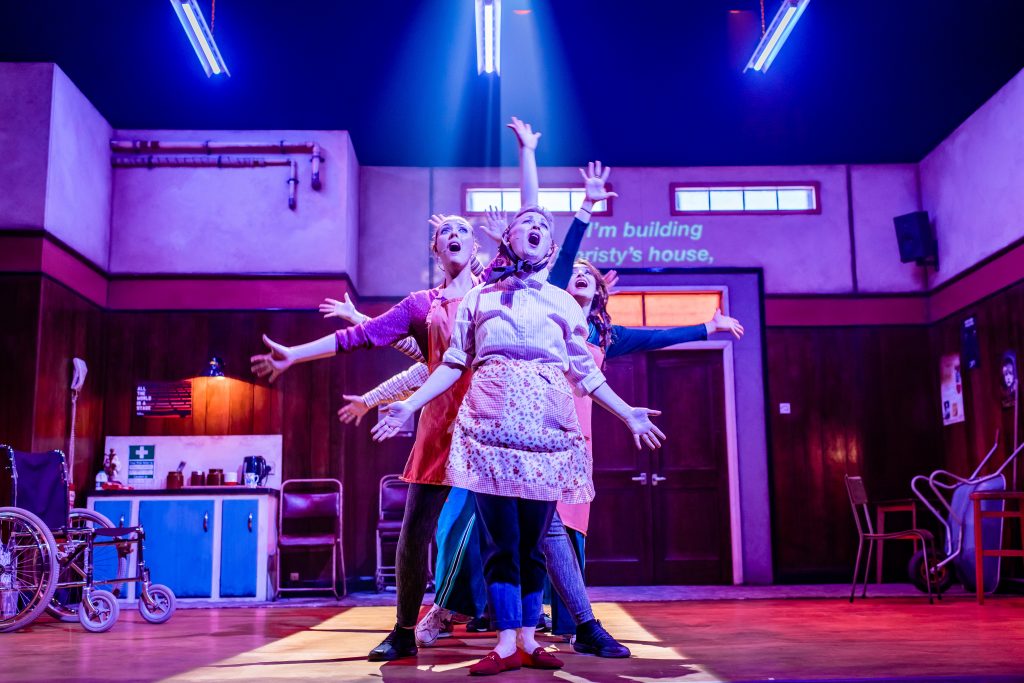
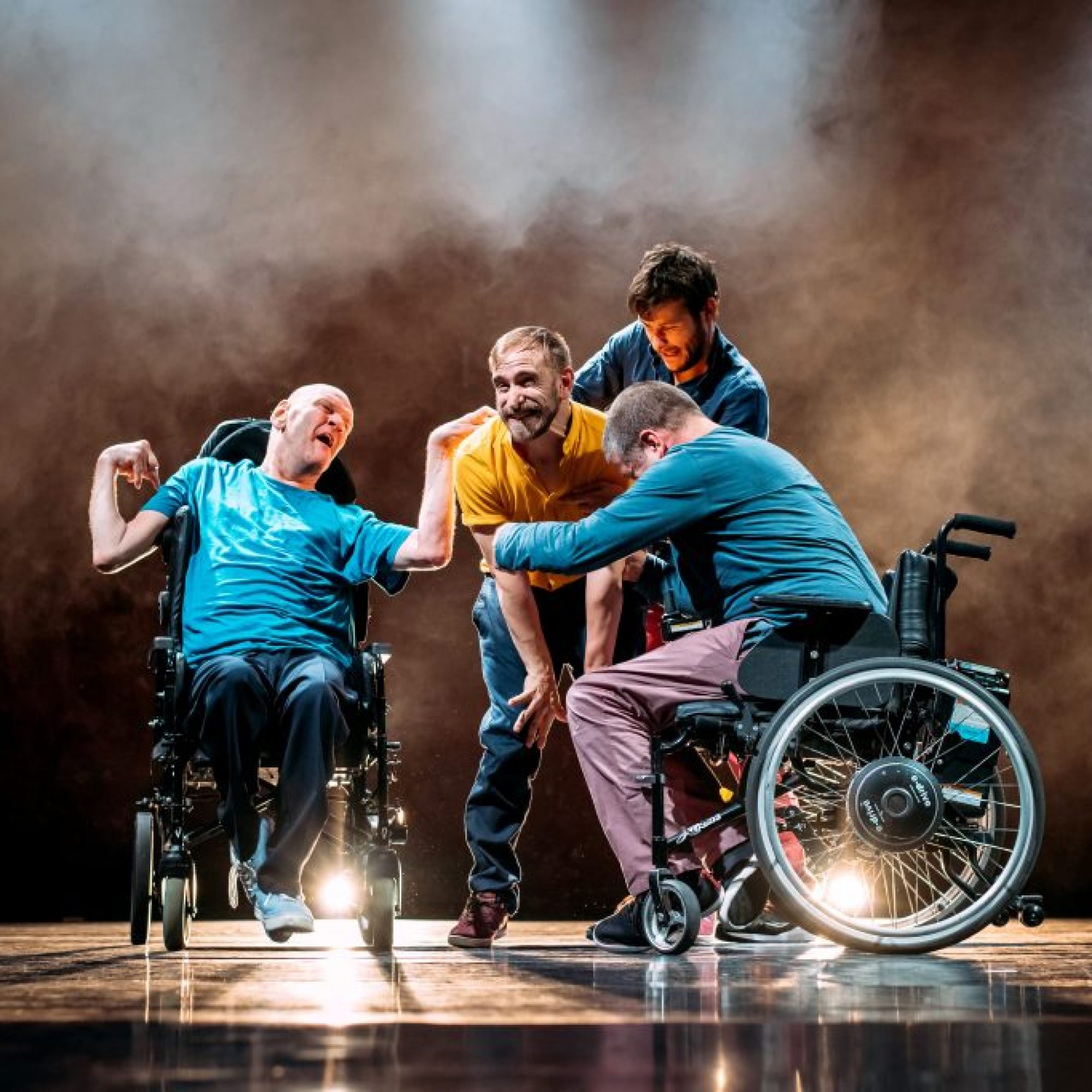
BOP cast differently for each production. Often in the development stages of our work, we know who we want to work with and build work around them. For instance, Wendy Hoose (2014/16) was written with Amy Conachan in mind and Purposeless Movements (2016/19) was developed with a cast of men who shared the same impairment. At other times we may cast for a character in a more traditional way, seeking to find the best performer for a given role. This may mean that we work with disabled actors because they have the most resonant impairment or experience for a given character For instance, Don’t. Make. Tea. (2022) tells the story of Chris who has a very specific medical condition. Her character developed as part of a long process of consultation and research with disabled people and while it would not be possible to cast an actor with exactly the same condition as Chris, we were able to focus on finding the best actor with direct lived experience to portray her.
What we do avoid is casting non-disabled actors to represent disabled characters – except where this is a creative choice! In 2018/2019 we examined ‘cripping up’ through My Left / Right Foot – The Musical.
BOP is committed to creating the highest quality work which continues to demonstrate and support a more diverse theatre sector.
We aim to be a dynamic theatre company. To address our vision and purpose we will adopt a Demonstrate and Support model that allows us to plan our work strategically, to be leaders and to influence others.
From now to 2021 we will work to meet the following outcomes:
- More people in more places (including rural and international communities) experience and have their perceptions changed through theatre by disabled people.
- People have increased access to a wider range of stories on stage.
- More disabled people have access to a full range of opportunities in the sector.
- People in the sector are more confident, skilled and knowledgeable about equalities.