Accessible Britain? Careful what you wish for!
A response to Don’t. Make. Tea. by Dr Sally Witcher
Cast your mind forwards a few years to an imaginary future. We’re living in an ‘Accessible Britain all can use’. Government adaptations to your home increase your independence. Your very own Alexa-like device is at your service, a helpful source of information to meet everyone’s needs. All the buses are fully accessible too. The good news keeps on coming. The disability benefits system no longer exists! It’s being replaced by a work system that focuses, not on your medical condition (which is no longer relevant, and some may suggest never was); not on what you can’t do, but on what you can. It will seek out the transferable skills you unwittingly possess. You may well be surprised how many you have. Score enough points and you’ll be offered your perfect job on the spot! Gone are the bad old days of distrust, of long complex forms and the dreaded brown envelope. Now you don’t even need to go anywhere to be assessed. It’s all done in the comfort and convenience of your own home.
They listened! They heard our words. They rectified all our complaints. What could possibly go wrong?
And why on earth shouldn’t we make tea?
To answer these questions, while simultaneously avoiding too many spoilers or writing a PhD thesis, let’s see if there are a few learning points we can usefully extract from disability history, ancient and modern.
1: We are not the problem
Down the centuries there have been many answers to the perennial question: “How do you solve a problem like disabled people?”. Some didn’t mess about. The ancient Romans drowned children with impairments in the Tiber. The Nazis took a similarly uncompromising view of us, as ‘useless eaters’, unworthy of life. So they killed an estimated 240,000 of us, out of public view when the public protested. We’ve been segregated into hospitals and mad-houses, put into ‘idiot-cages’ in town centres, branded as evil, cursed, unnatural changelings. Conversely, others saw us as objects for charity, to be pitied and cared for. They even on occasion elevated disability to a holy state. We have found ourselves cast as heroic (yet still tragic) survivors; our purpose to entertain non-disabled people and make them feel good about themselves; eternally grateful they’re not us!
The answers to the problem that we clearly are have ranged from care, control, contain, to kill. Whether sinners or saints, a focus for contempt, amusement or inspiration (inspiration porn as comedienne Stella Young memorably coined it) we have always been ‘other’; different; not ‘normal’. Certainly not equal. It’s almost as if they don’t like us much.
However, in the 1970s and 80s disabled people worked out that maybe they weren’t the problem that needed to be solved. Instead, the problem was that society doesn’t accommodate people with impairments. It wasn’t impairments that necessarily disable people but things like negative attitudes towards us, inaccessible buildings, communications, transport, and the inflexible way employment and services are organised. If those ‘social barriers’ were removed, while we’d still have our impairments, would we necessarily be disabled? Known as the social model of disability, it was a lightbulb moment in disability history, that illuminated a new understanding of disability, a vision to aspire to, and a route to getting there by removing social barriers. There was an alternative to care/ contain/ control/ kill. Now equality was firmly on the agenda. Or so we thought.
To realise that you’re not the problem, that you’re constrained by oppression not by your own innate inferiority, is where liberation begins. Without belief in your own worth you become complicit with those whose interests it serves to deny that worth. So, ‘rights not charity’ became our mantra. And we got some rights too, with the Disability Discrimination Act (now the Equality Act), which brought rights to
reasonable adjustments to remove social barriers. It means that those causing the barriers found themselves cast as the problem, which they then had to take action to solve by changing their practices. Strangely, that didn’t seem to mean they liked us any better.
While we have redrawn the battlelines and won a few battles, we emphatically have not won the war for equality. In fact, perhaps we have given our enemies, sometimes masquerading as our friends, some new weapons to attack us with and some new words with which to rebrand our oppression.
2: It doesn’t always go like you thought it would
In the days before the social model, and for some years after, as far as the welfare state was concerned disabled people were the ‘deserving poor’. Unlike the undeserving non-disabled who could (allegedly) help themselves if they only chose to pull their socks up, disability rendered us helpless. Our misfortune, not our fault. Of course we could never work and would therefore always need to be looked after.
That’s not what many of us wanted and it wasn’t necessarily true. The social model had revealed that what stopped some of us working was not our impairments, but discriminatory attitudes, inaccessible workplaces and inflexible working practices. We had seen how even well-meaning protection could become unjustifiable disempowerment. We didn’t want to surrender our lives and our freedoms to the control of other people. We wanted independent living — not to live ‘independently’ without support, fending for ourselves — but choice and control over our support and how we used it; hence over our lives as equal citizens with equal human rights. We wanted to work, so we fought to change the default assumption that we never could. And we won. Big time. But with it disabled people lost their assumed status of ‘deserving poor’.
Now we’ve made reasonable adjustments to remove social barriers, they said, what’s to stop you working? We’ve been swayed by the force of your argument. We agree you can work, just like you always said. What puzzles us is why you now don’t believe it. Maybe you never really did want to work in the first place. Or is it lack of skills and job-readiness? Maybe you just lack confidence and what you need is a firm-but-fair push. Sometimes it’s kind to be cruel.
Unfortunately, as wheelchair users throughout the land will testify, no amount of confidence is going to levitate them up that staircase. Nor is it going to open doors to employment that others still choose to keep shut. Confidence cannot raze to the ground the many social barriers that still patently exist. Failing to acknowledge that isn’t kindness. Just cruelty. At the heart of the problem lies the fact that they still think we are the problem. It’s us who have to show why we can’t work, not employers why they can’t do more to enable us to work. It’s us in the glare of the interrogatory spotlight, forced to perform our incapacity and dance to their tune. It’s not employers (or educators, architects, transport providers, etc) who are minutely grilled as to why adjustments aren’t reasonable, on peril of losing the income they need to survive. Aww, go on employers. There are so many reasonable adjustments you could make. So why not make it possible for us to boost your profits, expand your customer base and increase the nation’s tax revenue? You don’t know what you can do until you have to. Remember all those years we tried to tell you working from home was possible?
Oh… wait…
Maybe we should be careful what we wish for. If inaccessible workplaces and transport don’t necessarily prevent us from working, does that weaken the argument for making them accessible? Is that what we fought for: the right — or is it the duty — to be productive little prisoners, living out our lives in the not-so-splendid isolation ofour own homes? Are we once more, as in the bad old days, to be physically segregated from the rest of society? Furthermore, new technology may monitor what we do, all the better to learn about and anticipate our needs, but could it also become a means to manipulate and control us? It may draw our curtains but will it do the washing up? Does that mean social care workers can all be made redundant? And what use is technology to order shopping if we don’t have money to pay for it?
How can it be that whenever we think we’re moving towards equality, and new tools make it more possible, somehow we seem to end up further away?
3. There’s something else going on
The fact that working from home has been accepted as feasible doesn’t mean such jobs exist, as employers increasingly push for return to in-person office-based working. Even if technically you can work from your bed, it remains impossible for people who are ill, in acute pain, experiencing brain fog (the cosy term for brain damage), fatigue and/ or severe mental health issues. While more flexible working hours to accommodate flare-ups might help some, and removing social barriers is essential, there are limitations. Invisible illness and visible impairment don’t necessarily coincide. Work may be impossible, whether due to sickness and/ or disabling social barriers imposed both on people who are sick or have impairments. And how are individuals affected unequivocally to demonstrate or remove either?
When we’re told governments have to make difficult decisions at times of ‘austerity’, some may suspect it’s not them for whom their decisions will prove difficult. What invariably follows is the drive to focus public resources on ‘the most vulnerable’, as the entrance criteria become ever harsher for membership of this club no one wants to join. To qualify you must have plunged so far down the abyss of destitution there’s no way back. To qualify for ‘help’, those teetering on the brink must first fall — or jump — in. To grapple desperately to climb out takes you further away from support. To not grapple desperately to climb out makes destitution your choice.
As state support for the poor is reduced while increased for the rich, as wealth fails to trickle down but floods upwards and outwards to off-shore tax havens, essential public health and social care support systems collapse. Cost of living soars while income falls ever further behind, particularly for disabled people estimated to incur an average £600 per month of extra costs. While the numbers apparently judged deserving-to-be poor sky-rocket, the numbers of those deserving of support conversely dwindle – and not just because of the tightening of definitions. Poverty kills. So does despair. As the Disability News Service reported, over the last three years, secret reviews into deaths of benefit claimants linked to the failings of the Department for Work and Pensions (DWP) have more than doubled. They also reported on research linking the DWP’s Work Capability Assessment to 600 suicides. Meanwhile, the COVID-19 Inquiry has laid bare governmental attitudes towards those deemed an impediment to economic growth. Our rulers seem to see the purpose of all our lives as to improve profits, not the other way round.
There’s nothing inevitable about disabled people’s poverty, inequality or ‘vulnerability’. They are imposed on us by a society that has the tools and resources to prevent them but chooses not to use them. As the NHS collapses and the COVID-19 pandemic continues, along with governmental refusal to use now available tools to prevent its ongoing spread, economic inactivity due to sickness increases. Equally predictably they blame the victims. Bullying, gaslighting and destitution ensue. Disabled people are forced to reap what the government has sown. Ironically, so too are people not previously disabled, along with the economy.
Is self-destruction to be the only way out from the living hell created for us? Could that be why some disabled people are so terribly angry and scared at the prospect of the introduction of assisted dying and where it might lead? Disabled people may no longer be drowned in the river, that doesn’t seem to mean killing us is necessarily a thing of the past. And it’s much cheaper to make it our choice.
It’s high time to remind ourselves that another way is possible.
4. It doesn’t have to be this way
In Scotland, we saw a glimmer of hope for a very different approach. The Scottish Government committed itself to delivering a devolved benefits system based on dignity, fairness and respect. Its founding principles stipulate that it is a human right and must be designed with the people of Scotland. And warm words seemed, for once, to translate into action. People who rely on benefits were not just consultees but directly involved in shaping the system via ‘Experience panels’ of over 2400 people. They were co-designers of a Charter, with annual performance reports to Parliament and an independent oversight body. Involving people who use social security in setting expectations, designing the monitoring framework and assessing whether expectations have been met, drives standards from the ground up. Ultimately this represents a rebalancing of power. While it may become more challenging as the scale of delivery ramps up, the most recent verdict on performance was broadly positive.
But will devolved social security solve poverty? Can it deliver dignity, fairness and respect, not just in terms of how benefit is delivered but through providing an adequate income? Not unless DWP changes its tune, or Scottish Government unexpectedly finds a treasure trove down the back of its sofa. But, for now anyway, this example of successful co-design signals a better way forward exists.
5. What could possibly go wrong
Over the years we’ve seen how longstanding themes throughout disability history — care/ contain/ control/ kill — don’t go away but get repackaged in ways that make them publicly plausible and acceptable. Where that isn’t possible, they can still happen, caused by less conspicuous inaction as much as explicit action, out of public sight and mind.
Yet, while much plays out as cruelty, is that always the intention? Discrimination can sometimes result from a positive desire to help, and often out of a lack of awareness of the consequences. That’s why there is hope that co-production and collaboration as equal partners offer a way forward. But it means a rebalancing of power as well as resources. It also means acknowledging that we are all interdependent on each other. A disabled person could even be your boss! It means an end to disabled people being forced to make wildly unreasonable adjustments while those responsible for our exclusion fail to make adjustments that they often easily and cheaply could. It also means accepting that, even if everyone makes reasonable adjustments, some will never work. That doesn’t mean that they are not equally human and shouldn’t have equal human rights. Until that acceptance comes, the holy grail of equality will never be attained. Until then all we are likely to get is the reframing and rebranding of oppression.
That is why we have come to distrust governmental warm words, including those that are familiar because they are ours’. We’ve seen how words like ‘independence’, ‘care’, ‘work pays’ can play out as the polar opposite. We’ve also seen how government words don’t always translate into action, and how our own actions can be massively misinterpreted, in ways that would be hilarious if the consequences weren’t so devastating.
You can wave your arms about? If only you believed in yourself perhaps a glorious career awaits you as an international orchestral conductor! Or maybe a lollipop lady. Or scarecrow? There are so many ways you can make a useful contribution to society. If you can, it’s only fair you should.
Convincingly demonstrate your incapacity? You should be an actor. You’d win an Oscar! Obviously not an award of benefit. You clearly don’t need any more help to survive. You’re not dead, are you. You are literally the living proof.
So, why on earth shouldn’t you make a cuppa?
Because the consequences could kill you.
[toggle title_open=”About Dr Sally Witcher” title_closed=”About Dr Sally Witcher”]
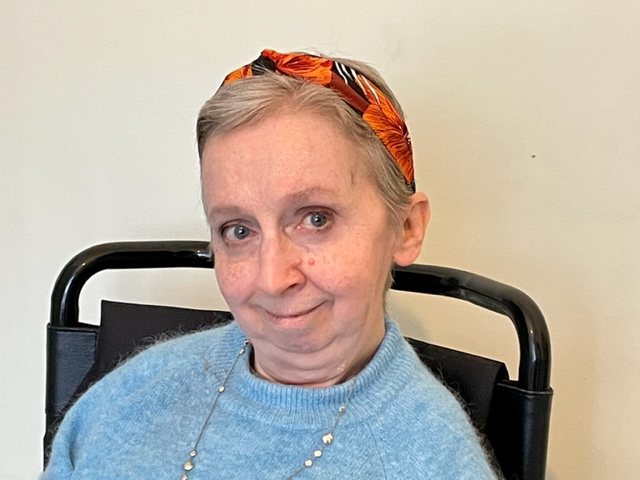
Dr Sally Witcher is a freelance consultant, a disabled person and disability benefit recipient. Former roles include CEO of Inclusion Scotland and Child Poverty Action Group (UK), Chair of the Disability Employment Advisory Group (UK Government) and senior civil servant in the Office for Disability Issues, DWP. Academic experience includes a PhD on diversity and social inclusion and advisory committee member for the LSE’s Centre for Analysis of Social Exclusion. She currently chairs the Scottish Commission on Social Security.
[/toggle]